

What to do if you’re being micro-managed
Micro-management isn’t new, it’s been a challenge for employees forever. But in this age of remote working, we’re seeing a rise in the stress levels of our boss, our colleagues and ourselves.

The social brain and the analytical brain
One of my favourite researchers is Mathew Lieberman, Professor at UCLA's Department of Psychology, Psychiatry and Biobehavioral Sciences and also Director of their Social Cognitive Neuroscience Lab.

Lack of belonging can kill you
We humans are the ultimate social animals. So much so that lack of belonging (or loneliness) increases our chances of dying earlier. By 45%. That's a lot.

Online meetings are here to stay – here are ten ways you can make yours better
Here are ten ways you can make yours better


Your culture is changing right now
You can feel it. We’re just getting past the initial shock of organising our days differently and managing the unexpected fatigue of endless video conferences*. Now we’re starting to wonder what’s next.

What if there is no 'them', there is only 'us'?
Take any group of people, even those who have never met each other before, and split them into two teams. Give them some kind of symbol, perhaps call one the yellow team and the other purple.

Do you know your impact on your team’s culture?
You have a team member who has behaved unethically and you decide to end their employment as a result. If your people think you made that decision because the person was behaving unethically, it is likely to have a significantly positive impact on your organisation's culture.

What if there is no destination? aka: Are we there yet?
We're often told that life is a journey. The renowned British philosopher Alan Wilson Watts had a different point of view. He described the traditional western educational system as setting up this analogy from our earliest years.
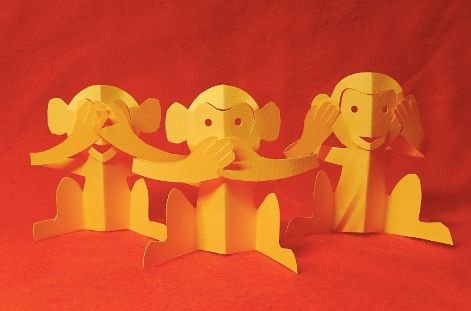
Does belonging trump ethics?
Think about the last time you were about to join a new group of people. It might have been starting a new school or university, joining a sports team, volunteering for a new organisation or the big one: starting a new job.

Need to influence someone?
Have you ever noticed that the most useful models and frameworks are often also the simplest? At least partly I’m sure that’s because they’re easy to remember and our brains are so full these days that complicated models are quickly forgotten.

What if you're not part of your organisation's culture?
You're a well-loved and respected leader. Your people trust you and genuinely believe you have their best interests at heart. But you're not part of your culture. Wait, what?